Too Many Tabs: The Case for Mystery That Doesn't Require a Spreadsheet
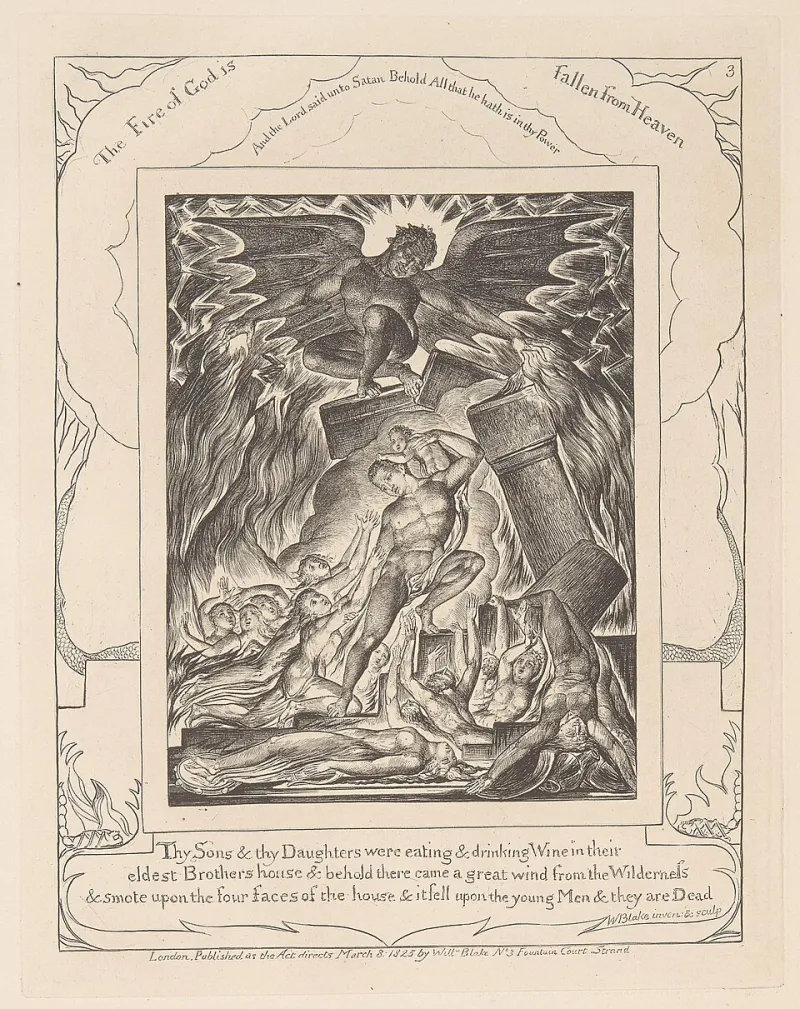
Photo: William Blake, CC0, via Wikimedia Commons
There's a specific kind of exhaustion that hits around 11 p.m. on a Sunday. You've just finished episode four of a show you genuinely like. You open your phone to see what people are saying, and instead of a discussion thread you find a 40-page community doc titled REQUIRED READING BEFORE EPISODE 5.
That's the moment the show stopped being entertainment and became a second job.
I'm not anti-puzzle. The best mysteries I've ever loved asked something of me. But somewhere between the ARG boom and the 2026 release calendar, asking something of the audience turned into demanding everything from them — and the people who tapped out first weren't lazy. They were reading the room.
The Puzzle Was Never the Point
Let's be honest about what made the early cryptic era work. The clues were optional. You could watch and hunt, or you could just watch. The lore rewarded curiosity; it didn't punish people who showed up with only curiosity and a Tuesday night.
What changed is that the lore stopped being a bonus layer and started being load-bearing. Studios figured out that scattered clues generate free content — reaction videos, explainer threads, subreddit archaeology — and the incentive flipped. If the community will do the marketing, why pay for it?
That's a business decision dressed up as an artistic one. Fans noticed.
What 2026's Biggest Mysteries Got Wrong
This year gave us a pretty clean natural experiment. Two of the most-hyped genre releases of 2026 built their entire rollout around hidden material, and both ended up with the same complaint in the same place: the comment sections.
Hollowtide, the coastal-horror series that spent eight months teasing a fictional shipping registry, is the obvious case. The show itself was strong. But to understand why the lighthouse keeper's brother mattered, you needed the tie-in podcast, three Instagram accounts that only posted at low tide, and a browser game that stopped working on Safari in June. Viewers who missed the podcast spent the finale confused. Viewers who caught everything spent the finale tired.
The game side wasn't better. A mid-2026 open-world release buried its actual plot resolution in a collectible codex that required cross-referencing in-game terminals with a real-world mailing list. Completionists adored it. Everyone else bounced somewhere around hour twelve, and the studio's own player-retention numbers reportedly told the story plainly.
Homework Fatigue Is a Design Problem, Not an Audience Problem
Here's the part the industry keeps getting wrong: when casual viewers leave, the instinct is to call them impatient. But watch what those same viewers do with a well-built mystery. They theorize. They rewatch. They show up on time.
They didn't lose the appetite for puzzles. They lost the appetite for logistics.
The difference between a riddle and a chore is friction. A riddle lives on the screen you're already looking at. A chore lives in eleven browser tabs, two apps you had to download, and a spreadsheet someone else made and you have to trust.
And the trust is the real casualty. Every hidden clue that's mandatory to comprehension tells the audience, quietly, that the story doesn't respect their time. Nobody wants to feel like they're failing a class they paid for.
The One-Screen, Zero-Tabs Standard
I'd like to propose a simple bar for accessible mystery, and I think it's one studios could adopt tomorrow without losing an ounce of atmosphere.
Everything essential lives on one screen. If a plot point determines whether the finale makes sense, it belongs in the show, the game, or the film itself. Deep lore can live anywhere it wants — but deep lore is dessert, not the meal.
Zero tabs to understand the main story. A viewer should never need a second window to follow the spine of the narrative. Cross-platform extras should deepen a story, not complete it.
Clues should be findable, not hidden behind hardware. No exclusives tied to a specific phone OS. No codes that only work in one region. If the clue needs a patch to be readable, it isn't a clue — it's a lottery ticket.
Reward the hunters, don't punish the passengers. The best 2026 example of this is a small thing that got almost no press: a mystery series that put its central reveal in the episode, then hid a second layer of context for anyone who wanted it. Hunters got their thrill. Everyone else got a complete story. Both groups came back for season two.
Publish a map after the fact. Once the season's done, put the whole puzzle in one place. It costs nothing, it makes the community's work permanent, and it turns latecomers into fans instead of quitters.
Mystery Is a Gift, Not a Toll
The cynical read on all this is that studios will keep scattering clues because the free labor is too good to pass up. And sure — the reaction economy isn't going anywhere.
But there's a business case for restraint, too. The franchises that endure aren't the ones with the most elaborate scavenger hunts. They're the ones where a stranger can press play on a random Tuesday and get hooked without a briefing document.
Mystery should feel like a door left open, not a velvet rope. The best-kept secrets in entertainment are the ones that don't check your credentials at the entrance.
So here's my ask for the 2027 slate, and it's a small one: give me a puzzle worth solving, then let me solve it sitting still. One screen. Zero tabs. If it's good enough, I'll build the spreadsheet myself — for fun, not for credit.