Work for It: Why the Best Audiences Today Refuse to Be Spoon-Fed
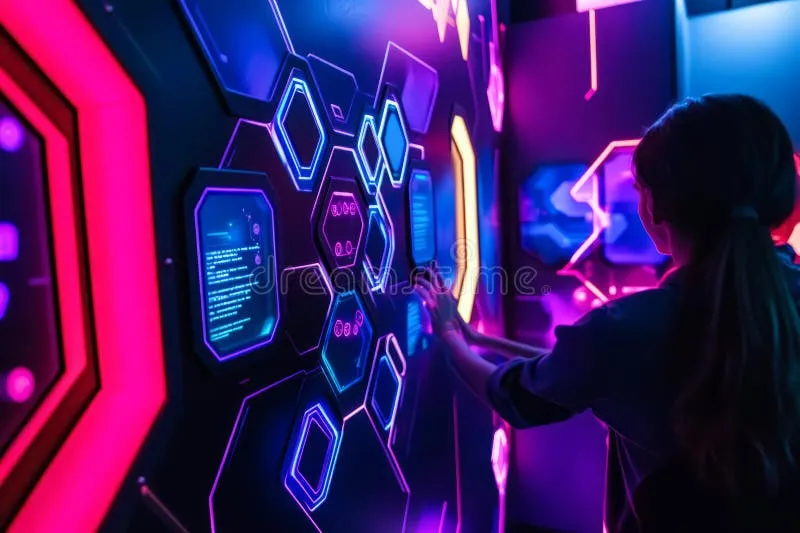
Photo: young person solving puzzle with glowing screen in dark room, via thumbs.dreamstime.com
There's a moment every ARG player knows. You've been staring at a Discord thread for forty-five minutes, cross-referencing timestamps, and then — something clicks. A pattern surfaces. The noise resolves into signal. That feeling? That's not a side effect of the entertainment. For a growing slice of the audience, that is the entertainment.
Passive consumption isn't dead. Netflix still prints money. Comfort rewatches of The Office aren't going anywhere. But something real has shifted in how a significant — and loudly influential — portion of the American audience relates to stories. They don't just want to receive a narrative anymore. They want to earn it.
The Psychology Behind the Grind
Psychologists have a concept called "cognitive engagement" — basically, the brain lights up differently when it's solving versus when it's just absorbing. Active problem-solving triggers dopamine pathways in ways that passive watching simply doesn't. It's the same reason crossword puzzles feel satisfying in a way that reading the answers does not.
Creators, whether they understand the neuroscience or not, are increasingly building that friction into their work on purpose. Fragmented timelines. Unreliable narrators. Lore buried three layers deep in a game's environmental design. These aren't lazy storytelling choices — they're deliberate invitations to participate.
And audiences, particularly Gen Z ones, are responding. According to multiple audience research surveys over the past few years, younger viewers consistently rate "content that makes me think" as a higher priority than "content that's easy to follow." That's a meaningful reversal from what focus groups were saying even a decade ago.
TikTok Turned Mystery Into a Social Sport
You can trace a lot of this shift to how TikTok restructured entertainment consumption. The platform didn't just shorten attention spans — that's the lazy read. What it actually did was gamify discovery. A cryptic video drops. Someone stitches a theory. Someone else debunks it. A third account finds a detail everyone missed. Within 72 hours, thousands of people have collaboratively decoded something that started as a fifteen-second clip.
That's not passive viewing. That's distributed detective work, and it's become one of the most engaging formats the platform produces. Creators who understood this early — the ones who deliberately left loose threads and unresolved questions in their content — built audiences that weren't just watching but hunting.
The most-discussed TikTok moments of the last two years weren't polished productions. They were puzzles. Ambiguous endings. Unexplained details. Things that demanded a comment section to complete.
Podcasts Went Deep and Never Came Back
Audio storytelling has quietly become one of the richest spaces for participatory narrative. Podcast ARGs — shows that blur the line between fiction and listener-integrated mystery — have developed dedicated, obsessive fanbases that make traditional podcast audiences look casual by comparison.
Shows like The Black Tapes, Limetown, and more recent experimental productions have demonstrated that listeners don't just tolerate complexity — they recruit for it. Fan wikis. Reddit threads that run longer than the scripts. Discord servers where listeners pool clues between episodes. The show itself becomes almost a prompt, and the community generates the rest of the experience.
What's interesting is how this changes the creator-audience relationship. The audience isn't consuming a finished product. They're collaborating on an ongoing one. Creators who've leaned into this describe feeling less like authors and more like game masters — setting conditions and watching what the audience builds inside them.
Game Narratives as the Template
Video games figured this out first, and the rest of entertainment has been catching up ever since. The Dark Souls model — cryptic lore, no hand-holding, environmental storytelling that only reveals itself to the patient and attentive — was initially criticized as punishing. Now it's recognized as a design philosophy that created one of the most loyal and analytically engaged audiences in entertainment history.
FromSoftware didn't make the story hard to access by accident. They made it a reward. Players who put in the hours don't just know the lore — they own it in a way that people who watched a YouTube summary never will. That sense of earned understanding is a powerful psychological bond between audience and material.
Other developers took notes. Games like Outer Wilds, Disco Elysium, and Tunic are built around the same core premise: the meaning is there, but you have to assemble it yourself. The assembly is the point.
The Suspicion of Easy Answers
Here's the part that's genuinely new and worth paying attention to: younger audiences have developed an active distrust of entertainment that doesn't require effort. It's not just that they prefer complexity — they're increasingly skeptical of content that feels too smooth, too resolved, too willing to explain itself.
Part of this is cultural. Gen Z grew up in an information environment where everything was being packaged and sold to them, where algorithms were optimizing for frictionless engagement. They learned, consciously or not, that frictionless usually means someone is doing the thinking for you — and probably steering you somewhere in the process.
Content that demands active interpretation feels, by contrast, more honest. More trustworthy. If you had to figure it out yourself, at least the conclusion belongs to you.
This is why "spoon-fed" has become a genuine insult in certain online spaces. Calling a narrative too explanatory isn't just an aesthetic critique — it's a character judgment. It suggests the creators didn't respect their audience enough to let them work.
What Creators Are Actually Building Now
The smartest creators working today aren't just making complex content — they're architecting systems for audience participation. They're designing the gaps as deliberately as the content itself. They're thinking about where the community will gather, what they'll argue about, what they'll find.
This is a fundamentally different creative mode. It's less about controlling a narrative and more about creating conditions for one to emerge. The signal goes out. The audience decodes it. What comes back is something neither side could have made alone.
That's the real shift. Entertainment used to be a broadcast. Now, at its most engaging, it's a conversation — and the audiences who've figured that out aren't going back to just listening.